Automations & Workflows
Slack-to-ClickUp Task Automation System
Turn Slack chats into ClickUp tasks — powered by AI, error-proof, and instant
Year :
2025
Project Duration :
1 week
Problem :
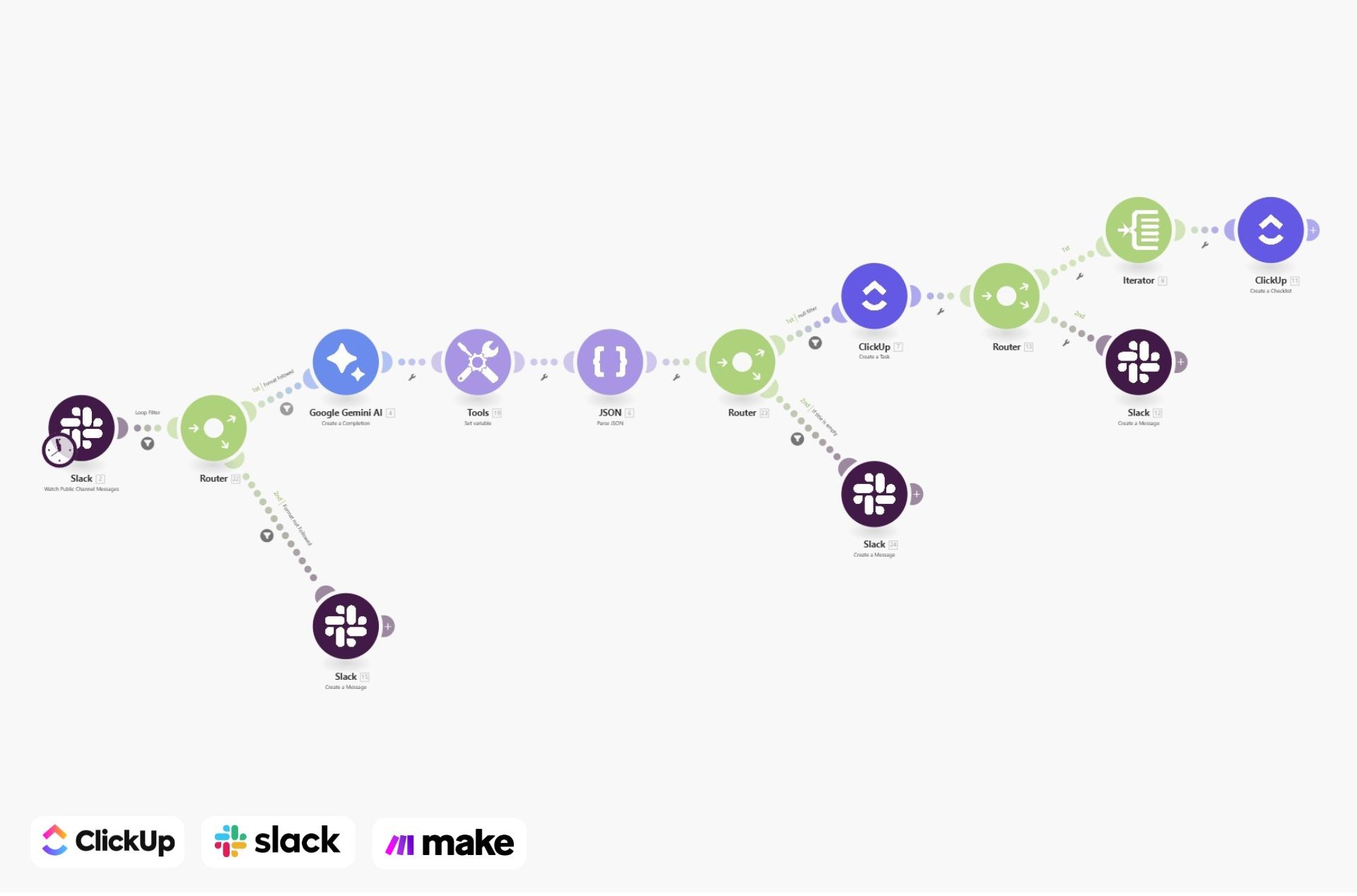
Teams often drop task requests in Slack, but without structure they get lost in chat threads, lack deadlines, or never make it into project management tools like ClickUp. This leads to missed tasks, unclear priorities, and wasted time manually copying information from Slack into ClickUp.
Solution :
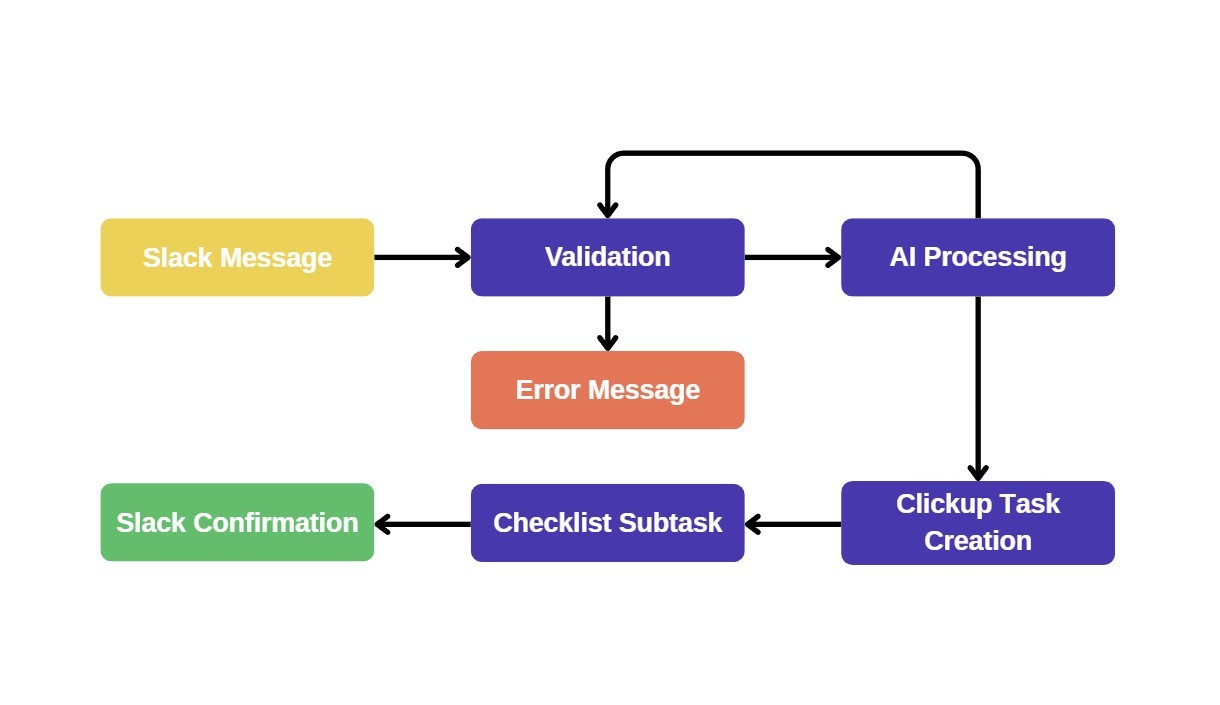
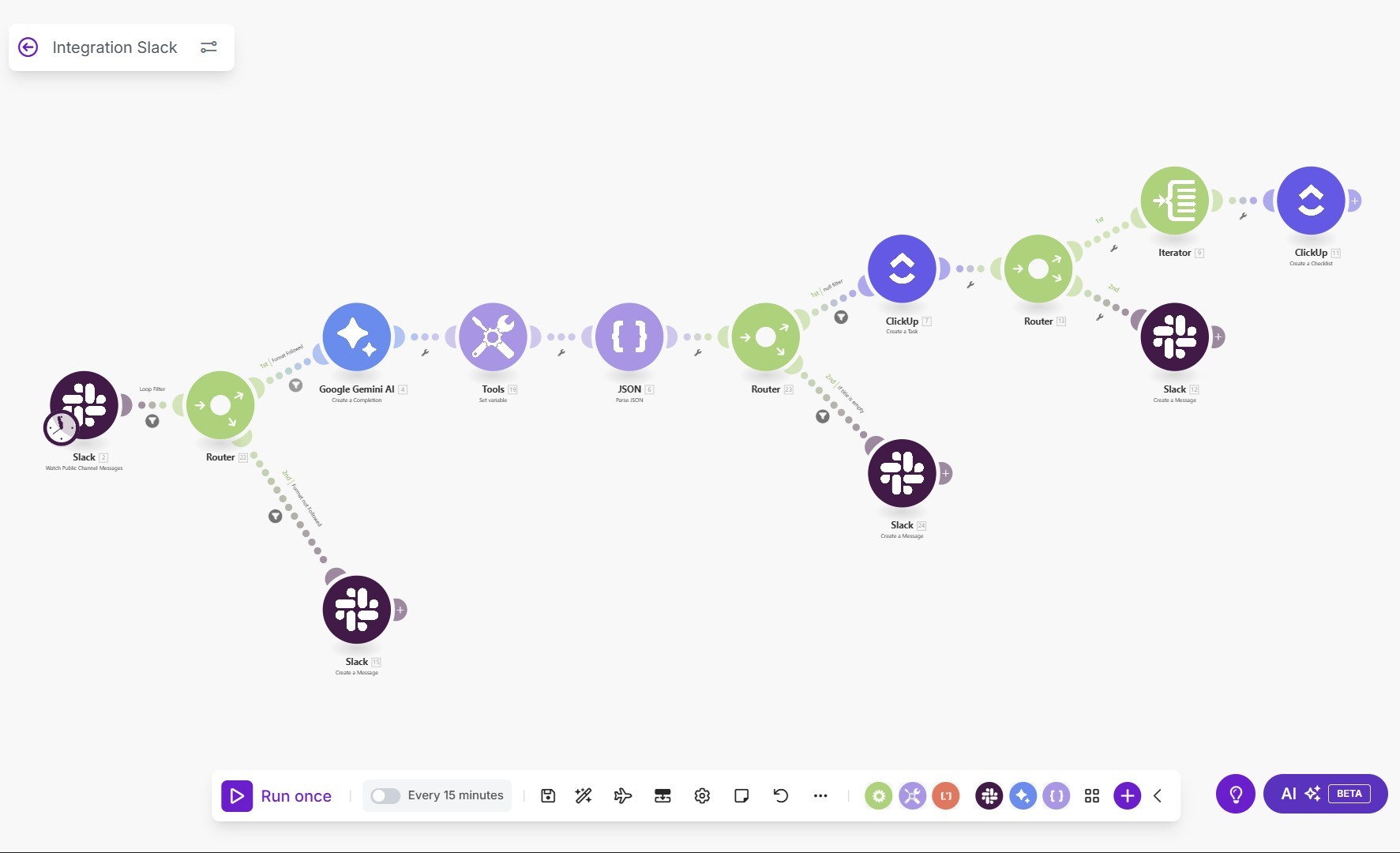
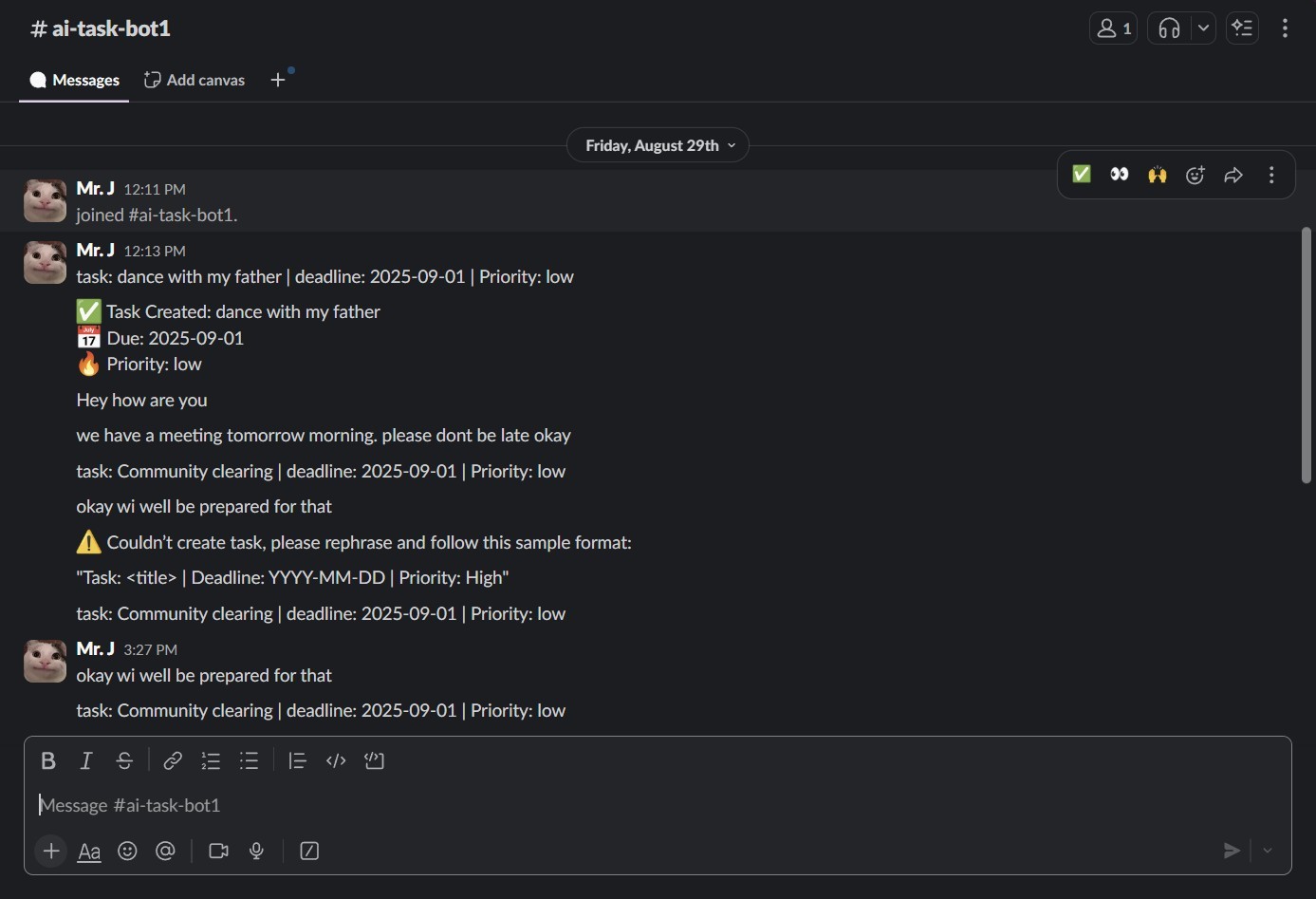
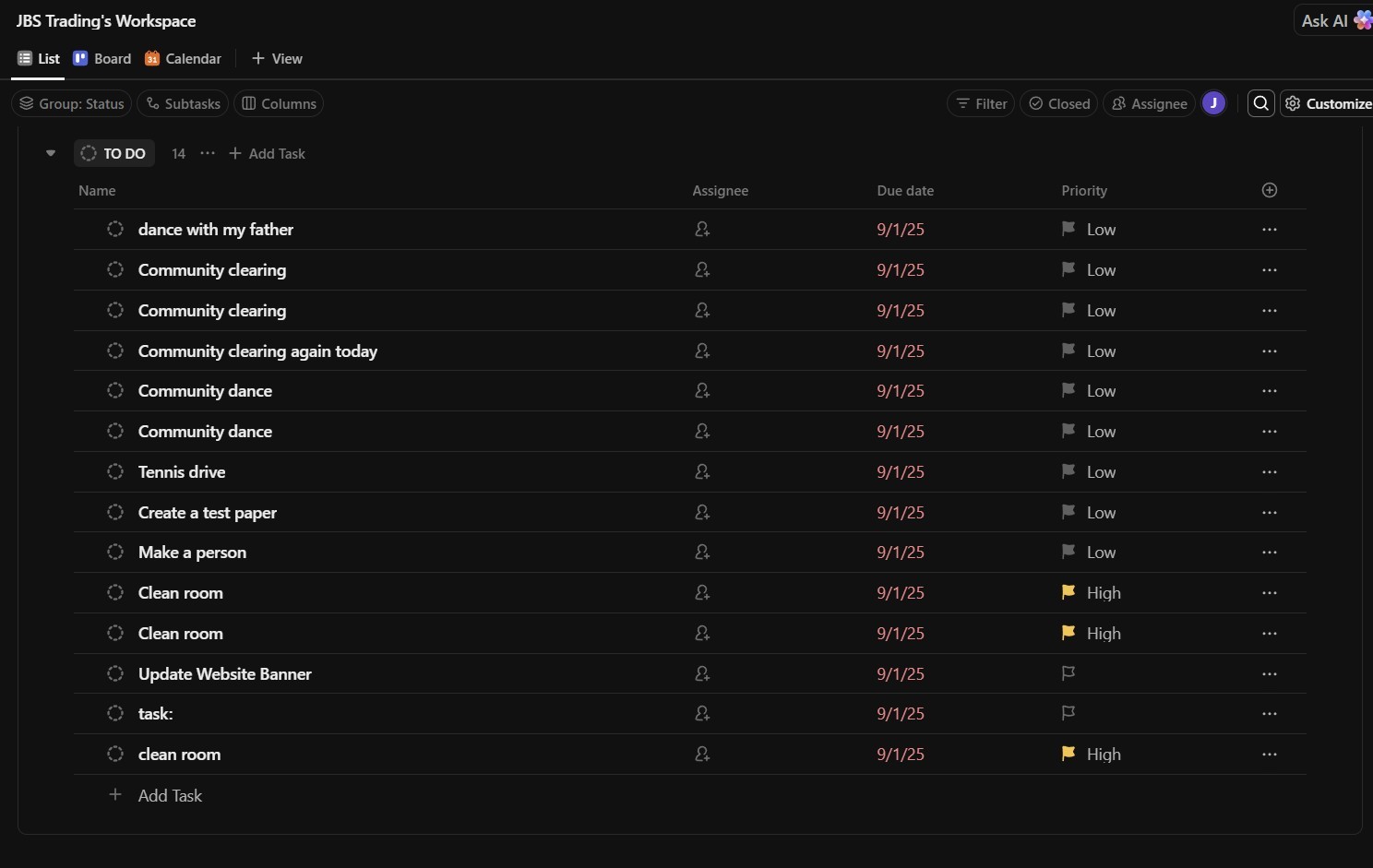
This automation bridges Slack and ClickUp by turning structured Slack messages into fully created tasks inside ClickUp, complete with deadlines, priorities, and checklists. A strict AI parser (Gemini) cleans and validates input, while error-handling nodes catch formatting mistakes to guide users in real time. The system ensures tasks are never lost in chat, eliminates manual data entry, and gives teams instant confirmation that their request is logged and actionable.
Challenge :
Setting up the Slack trigger required repeated credential authentication in n8n/Make, which was confusing at first.
Parsing Slack messages into clean JSON was tricky — especially stripping out formatting (```json, backticks, etc.).
Handling invalid or missing fields forced me to build multiple error fallback routes so the workflow didn’t break.
Mapping task fields into ClickUp (like deadline format and priority synonyms) required custom normalization logic.
Iterating checklist items into ClickUp was not straightforward — I had to learn how to loop data dynamically.
Debugging error-handling messages in Slack (ensuring they displayed cleanly without breaking the user experience).
Summary :
This automation streamlines task creation by converting unstructured Slack messages into structured ClickUp tasks with deadlines, priorities, and checklists. The system uses Google Gemini AI for strict parsing, n8n for orchestration, and robust error handling to keep users in the loop.
During development, I solved challenges like cleaning inconsistent Slack inputs, normalizing dates and priorities, dynamically creating checklists, and building clear error feedback loops. The result is a resilient workflow that reduces manual task entry errors, speeds up team collaboration, and proves the ability to handle medium-to-hard automation challenges like data normalization and API iteration.
More Projects
New release
Preview
Automations & Workflows
Slack-to-ClickUp Task Automation System
Turn Slack chats into ClickUp tasks — powered by AI, error-proof, and instant
Year :
2025
Project Duration :
1 week
Problem :
Teams often drop task requests in Slack, but without structure they get lost in chat threads, lack deadlines, or never make it into project management tools like ClickUp. This leads to missed tasks, unclear priorities, and wasted time manually copying information from Slack into ClickUp.
Solution :
This automation bridges Slack and ClickUp by turning structured Slack messages into fully created tasks inside ClickUp, complete with deadlines, priorities, and checklists. A strict AI parser (Gemini) cleans and validates input, while error-handling nodes catch formatting mistakes to guide users in real time. The system ensures tasks are never lost in chat, eliminates manual data entry, and gives teams instant confirmation that their request is logged and actionable.
Challenge :
Setting up the Slack trigger required repeated credential authentication in n8n/Make, which was confusing at first.
Parsing Slack messages into clean JSON was tricky — especially stripping out formatting (```json, backticks, etc.).
Handling invalid or missing fields forced me to build multiple error fallback routes so the workflow didn’t break.
Mapping task fields into ClickUp (like deadline format and priority synonyms) required custom normalization logic.
Iterating checklist items into ClickUp was not straightforward — I had to learn how to loop data dynamically.
Debugging error-handling messages in Slack (ensuring they displayed cleanly without breaking the user experience).
Summary :
This automation streamlines task creation by converting unstructured Slack messages into structured ClickUp tasks with deadlines, priorities, and checklists. The system uses Google Gemini AI for strict parsing, n8n for orchestration, and robust error handling to keep users in the loop.
During development, I solved challenges like cleaning inconsistent Slack inputs, normalizing dates and priorities, dynamically creating checklists, and building clear error feedback loops. The result is a resilient workflow that reduces manual task entry errors, speeds up team collaboration, and proves the ability to handle medium-to-hard automation challenges like data normalization and API iteration.
More Projects
New release
Preview
Automations & Workflows
Slack-to-ClickUp Task Automation System
Turn Slack chats into ClickUp tasks — powered by AI, error-proof, and instant
Year :
2025
Project Duration :
1 week
Problem :
Teams often drop task requests in Slack, but without structure they get lost in chat threads, lack deadlines, or never make it into project management tools like ClickUp. This leads to missed tasks, unclear priorities, and wasted time manually copying information from Slack into ClickUp.
Solution :
This automation bridges Slack and ClickUp by turning structured Slack messages into fully created tasks inside ClickUp, complete with deadlines, priorities, and checklists. A strict AI parser (Gemini) cleans and validates input, while error-handling nodes catch formatting mistakes to guide users in real time. The system ensures tasks are never lost in chat, eliminates manual data entry, and gives teams instant confirmation that their request is logged and actionable.
Challenge :
Setting up the Slack trigger required repeated credential authentication in n8n/Make, which was confusing at first.
Parsing Slack messages into clean JSON was tricky — especially stripping out formatting (```json, backticks, etc.).
Handling invalid or missing fields forced me to build multiple error fallback routes so the workflow didn’t break.
Mapping task fields into ClickUp (like deadline format and priority synonyms) required custom normalization logic.
Iterating checklist items into ClickUp was not straightforward — I had to learn how to loop data dynamically.
Debugging error-handling messages in Slack (ensuring they displayed cleanly without breaking the user experience).
Summary :
This automation streamlines task creation by converting unstructured Slack messages into structured ClickUp tasks with deadlines, priorities, and checklists. The system uses Google Gemini AI for strict parsing, n8n for orchestration, and robust error handling to keep users in the loop.
During development, I solved challenges like cleaning inconsistent Slack inputs, normalizing dates and priorities, dynamically creating checklists, and building clear error feedback loops. The result is a resilient workflow that reduces manual task entry errors, speeds up team collaboration, and proves the ability to handle medium-to-hard automation challenges like data normalization and API iteration.
More Projects
New release
Preview